
After Individualism
The Failure of the Nuclear Family, The Limits of Western Individualism, and the Return of the Indo-European Clan

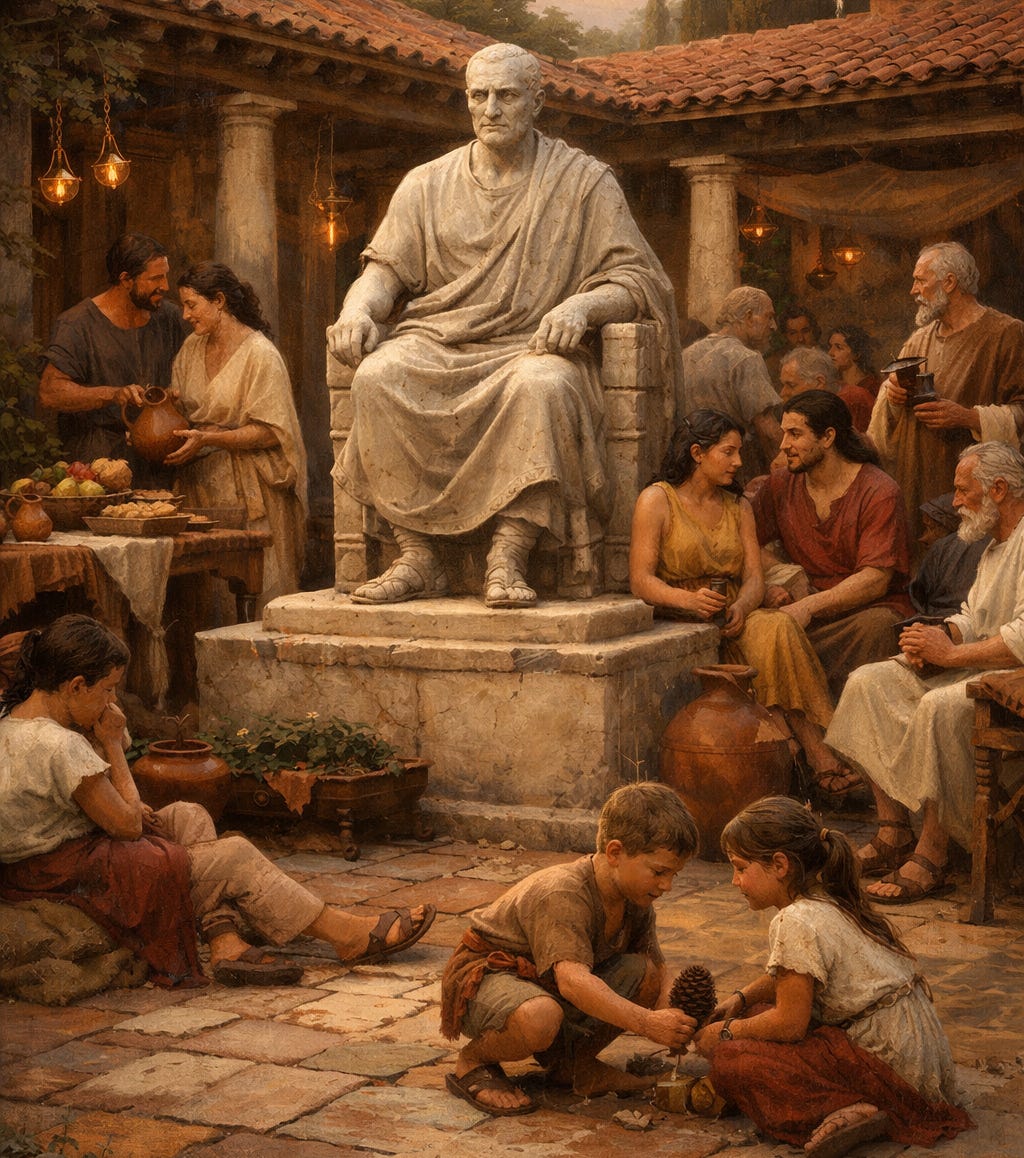
For most of Western history, the family was not a lifestyle choice but essential infrastructure. It produced children, transmitted property, enforced norms, and embedded the individual in a web of obligation that stretched backward to ancestors and forward to descendants. It was economic unit, moral school, and social security system at once. Civilizations did not debate its relevance; they rested upon it. Today that infrastructure is failing, as across Europe and North America, fertility rates sit below replacement. Marriage is delayed, avoided, or dissolved. Single-person households proliferate. Intergenerational co-residence declines. The elderly age alone; the young drift without durable attachment. The smallest family form in Western history, the two-parent nuclear household—is no longer reliably reproducing either population or cohesion. This is not a culture-war anecdote but it is a structural shift. For roughly three centuries, the nuclear family was treated as the natural endpoint of social evolution: lean, mobile, adaptable to markets and modern states. It fit industrialization. It fit liberal law. It fit the ideology of the autonomous individual. Compared to extended kin systems, it appeared efficient, rational, and progressive, but efficiency is not the same as durability.
The nuclear household is thin by design. Two adults, separated from extended kin, must generate sufficient economic stability, emotional intensity, and moral discipline to raise the next generation in isolation from dense communal reinforcement. Under conditions of high religious belief, strong stigma, and limited mobility, that model proved workable. Under secular consumer modernity, it appears fragile. Once religion weakens, once mobility becomes constant, once identity is self-constructed rather than inherited, the small household begins to disintegrate. Divorce rises. Childbearing falls. The individual detaches, not only from clan and church, but from spouse and offspring. What remains is not a liberated citizen embedded in a thriving republic. It is often an isolated consumer managed by market and state. The West has produced extraordinary wealth, science, and power under this individual-centered order. That is not in dispute. The question is simpler and more uncomfortable: can a civilization organized around the sovereign individual survive if that individual no longer forms stable families or produces children? If family structure is the mechanism by which cultures reproduce themselves biologically and morally, then its destabilization is not a peripheral issue. It is civilizational.
This essay does not argue for nostalgia. It does not propose a naïve return to medieval Europe or Bronze Age tribalism. It asks a narrower, more structural question: whether the nuclear family was a historically contingent form suited to a particular phase of Western development and whether its late-modern collapse signals the exhaustion of that phase. If the nuclear household is not a permanent endpoint, then we must consider what preceded it, what sustained societies before it, and whether some form of re-embedded kinship is not regression, but adaptation. Civilizations survive when they reproduce demographically and culturally. When they cease to do so, decline is not ideological; it is biological. The West now faces that arithmetic.
Family Systems as Civilizational Infrastructure
Modern discussions of the family tend to treat it as a private arrangement, as an outcome of preference, lifestyle, or economic convenience. This assumption is historically unusual. For most of human history, and across most civilizations, the family was not a matter of choice but of structure. It determined how authority functioned, how property moved, how obligations were enforced, and how identity itself was formed. To speak of “the family” in the abstract is already to adopt a late-modern perspective. What earlier societies possessed were not interchangeable household forms, but distinct family systems deep, patterned structures that organized social life. It is this structural dimension that Emmanuel Todd sought to recover in his work The Explanation of Ideology. Todd’s central claim is deceptively simple that political ideologies, social norms, and even economic behaviors are not free-floating constructs but are rooted in underlying family organization, as he puts it, “family structures are the invisible matrix of ideologies.”1 The implication is radical, as what appears as abstract belief like liberalism, egalitarianism, authoritarianism, may in fact be the surface expression of much older, more stable patterns of kinship and inheritance.
Todd’s typology distinguishes several major family forms, but for our purposes the key contrast is between nuclear and communitarian systems. In the nuclear model, the household consists of parents and their children, with relatively weak institutional ties to extended kin. Authority is limited, inheritance is often flexible or bilateral, and children are expected to establish independent households. This structure fosters a particular psychological and social orientation: autonomy, mobility, and a tendency toward individual equality. It is no accident that regions historically dominated by nuclear families especially parts of Northwestern Europe later became the heartlands of liberal individualism. By contrast, communitarian or clan-like systems organize life around extended descent groups. Authority is stronger and often patriarchal, inheritance is structured to preserve continuity, and individuals remain embedded within a network of obligations that extends beyond the immediate household. Marriage is not merely a personal union but a strategic alliance. Identity is not self-generated but inherited and reinforced through collective memory. These systems produce a different ideological tendency: one oriented toward hierarchy, continuity, and collective cohesion. Todd’s insight is not that one system is morally superior to another, but that each generates a distinct form of social life. The family, in this sense, is not downstream from ideology; it is upstream, as he writes, “the diversity of family structures explains the diversity of ideological systems.”2 The Western tendency to treat the individual as primary is therefore not simply a philosophical choice. It is rooted in a particular historical configuration of the family.
This raises a crucial question: how unique is the Western nuclear model? Historically, Western Europe especially its northwestern regions, did exhibit an unusually early and pronounced form of nuclearization. Households were relatively small, young adults often left home to form independent units, and inheritance practices did not always prioritize strict lineage continuity. This pattern distinguished it from many other parts of the world, where extended kinship structures remained dominant. Over time, this family form aligned with broader developments: the rise of wage labor, the expansion of markets, and the emergence of legal systems centered on individual rights. The apparent success of this configuration led to a powerful assumption: that the nuclear family was not merely one form among many, but the end point of social evolution. It appeared efficient, adaptable, and compatible with modern economic life. It reduced complexity, minimized internal hierarchy, and allowed individuals to move freely within expanding markets and states. In this sense, it seemed perfectly suited to what would later be called modernity. But this assumption rests on a hidden premise, that efficiency and adaptability are sufficient for long-term stability.
Todd’s framework allows us to question that premise. If family systems are the deep infrastructure of civilization, then their durability cannot be judged solely by short-term economic performance. They must also be evaluated by their ability to reproduce population, transmit culture, and sustain social cohesion across generations. A system that excels in mobility but fails in continuity may be highly effective in one phase of development and deeply unstable in another. This is where the Western nuclear model becomes analytically problematic. Its very strengths of mobility, flexibility, and individual autonomy also make it structurally thin. By reducing the density of kinship ties, it places greater weight on the immediate household. Two parents must perform functions that, in extended systems, are distributed across a wider network: economic support, childcare, elder care, moral enforcement, and social integration. When those two individuals succeed, the system functions. When they fail, there is little redundancy. Historically, this fragility was mitigated by external supports. Religious institutions provided moral discipline and communal identity. Social norms enforced marriage and stigmatized deviation. Local communities offered informal networks of assistance. Under these conditions, the nuclear family could operate as a stable unit within a broader web of reinforcement. However these supports are not inherent to the nuclear structure itself. They are contingent.
Once they weaken, the underlying thinness of the model becomes visible. Without strong external constraints, the autonomy it fosters can turn inward, dissolving the very bonds it depends on. The individual, no longer anchored by dense kinship or reinforced by communal norms, becomes increasingly self-referential. The family, reduced to a voluntary association between two autonomous agents, becomes more fragile, more contingent, and more easily dissolved. Todd’s analysis does not predict this outcome explicitly, but it makes it intelligible. If the nuclear family is the structural foundation of Western individualism, then the intensification of that individualism may eventually undermine the family itself. The system contains a tension: it produces the autonomy that can dissolve it. This tension becomes especially acute in late modern conditions, where mobility is constant, economic life is detached from place, and identity is increasingly self-defined. In such an environment, the nuclear household is no longer embedded in a dense network of obligation. It stands alone, expected to sustain itself without the structural supports that once made it viable.
At this point, the question is no longer historical but civilizational, as if family systems are the hidden architecture of social order, and if the dominant Western form is destabilizing under current conditions, then we are not dealing with a marginal social issue. We are confronting a foundational transformation. The decline of the nuclear family is not simply a shift in lifestyle preferences. It is a signal that the underlying infrastructure of Western society may no longer be aligned with the conditions in which it operates. To understand what might replace it or whether anything can we must look beyond the assumption that the nuclear model is universal or permanent. We must recover the broader historical field of family systems and recognize that the Western trajectory represents one path among many, not the inevitable destination of all. Only then can we begin to assess whether the current moment represents temporary dislocation or structural exhaustion.
![r/MapPorn - World Family Systems (Emmanuel Todd) [1250x770]](https://substackcdn.com/image/fetch/$s_!mk4d!,f_auto,q_auto:good,fl_progressive:steep/https%3A%2F%2Fsubstack-post-media.s3.amazonaws.com%2Fpublic%2Fimages%2Ff67d26a0-23cf-4dc2-9634-1099948b404f_640x394.png "r/MapPorn - World Family Systems (Emmanuel Todd) [1250x770]")
World Family Systems( for the map above)
Red - Exogamous community family (equal inheritance; sons live with father; exogamous)
Light Orange/Brown - Endogamous community family (equal inheritance; sons live with father; endogamous i.e. cousin marriage, typically of the father’s brother’s daughter type)
Yellow - Asymmetric community family (equal inheritance; sons live with father; endogamous i.e. cousin marriage, typically of the mother’s sister’s daughter type)
Light Blue - Egalitarian nuclear family (equal inheritance; children leave the household early; exogamous)
Turquoise - Authoritarian/stem family (unequal inheritance; eldest son lives with father; exogamous)
Green (i.e. Anglos mostly) - Absolute nuclear family (unequal inheritance; children leave the household early; exogamous)
Purple - Anomic family (nuclear family but no strict tabboo against endogamy)
Dark Green - African family systems (characterized by exogamous polygamy)
The Exogamous Clan as Deep European Substrate
If the nuclear family appears, in the modern imagination, as the natural and inevitable form of social organization, the historical record tells a different story. Across the breadth of early European and Indo-European societies, the dominant structure was not the isolated household but the descent-based group, a corporate, enduring unit that bound individuals into a network of obligation extending across generations. The individual did not stand alone; rather, he was situated within a lineage, and that lineage was the primary bearer of identity, property, and moral authority. To recover this world, one must begin with the classical civilizations themselves, not as exceptions to kinship organization, but as its sophisticated expressions. In The Ancient City by Numa Denis Fustel de Coulanges provides one of the most penetrating accounts of the ancient family. His argument is not that Greece and Rome transcended kinship, but that their political and religious institutions were built directly upon it. The family, in this context, was not merely biological; it was sacred, juridical, and economic, as de Coulanges writes,
The family was a religious community more than a natural association. It was formed for the performance of sacred rites, and it perpetuated itself not only by generation but by the continuation of worship.3
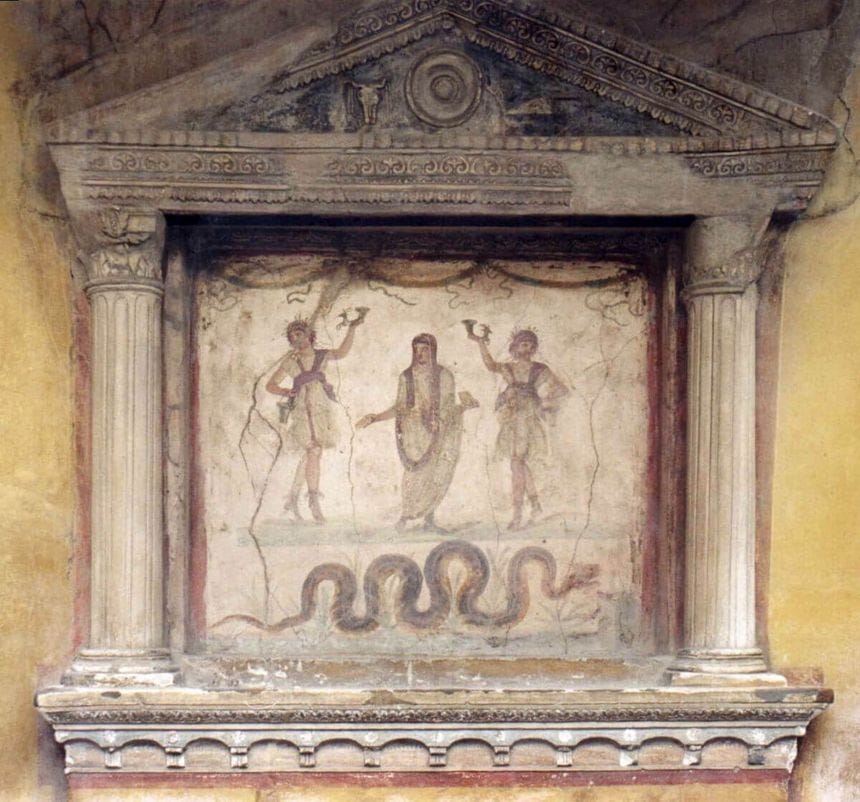
This insight is crucial. The ancient family was not reducible to co-residence or affection. It was a corporate body, united by the cult of ancestors, bound by ritual obligations, and structured around continuity. The living were stewards of the dead, and the unborn were inheritors of both property and sacred duty. In such a system, the dissolution of the family was not merely a social failure; it was a rupture in the moral and religious order. This corporate character extended beyond the immediate household. The Greek genos and the Roman gens were not loose associations but structured descent groups, often tracing lineage to a common ancestor, real or mythical, and maintaining internal cohesion through shared rites and legal privileges. Membership in these groups conferred identity and status, but also imposed obligations. The individual was intelligible only within this framework.
William Edward Hearn, in The Aryan Household, extends this analysis beyond the classical Mediterranean to the broader Indo-European world. Hearn’s work is comparative, tracing parallels across Greek, Roman, Germanic, and Indo-Iranian societies. What emerges is not a single uniform system, but a recurring structural logic: the household and the larger kin group as foundational units of social organization, as Hearn emphasizes the legal and economic dimensions of this structure,
The household was not a mere collection of individuals; it was a corporation, with rights and duties distinct from those of its members, and with a continuity that transcended the lives of any particular generation.4
This notion of the family as a corporation is central. Property was not simply owned by individuals but held within the lineage, transmitted according to rules designed to preserve continuity across generations. Authority was vested in the head of the household, but this authority was not arbitrary; it was embedded in a system of obligations that linked past, present, and future, binding the living to ancestral continuity and structuring inheritance, obligation, and alliance at the level of the kin group rather than the isolated individual. In this sense, the primary social unit is not the individual but the clan or descent group, within which individuals are positioned as members of enduring corporate entities. Crucially, these descent-based systems are best understood as operating at the level of interacting kin groups rather than autonomous individuals, and their marital logic reflects this structure. Marriage does not primarily function as a dyadic relationship between two individuals, but as a regulated mechanism for connecting or realigning two descent groups within a wider tribal or ethnocultural field. The analytical distinction can again be expressed in terms of closure radius: Indo-European systems are predominantly exogamous in orientation, meaning that marriage is directed outward from the immediate lineage and structured to prevent tight internal closure of the reproductive unit.
Accordingly, consanguineous marriage is not the organizing principle of the system but a secondary and strategic mechanism within an exogamous structure. In many Indo-European contexts, especially among property-holding or status-conscious groups, marriages between more distant cousins (such as third or fourth cousins) occur not as a default pattern of reproduction but as a deliberate strategy to maintain continuity of status, inheritance, and landholding when lineages risk dispersion. Such unions function less as inward closure than as controlled reconnection, reattaching branches of a wider kin system that might otherwise drift apart over generations. The key structural point is that the operative unit is the clan or descent group, and marriage is the mechanism through which these units are either linked for the first time or periodically realigned. Exogamous marriage therefore serves a dual function: it creates alliances between distinct kin groups within a shared tribal or cultural field, and it also allows the periodic reintegration of more distant segments of related descent lines, preserving continuity across time without collapsing the system into a single closed reproductive core.
This notion of the family as a corporate unit is central. Property was not simply owned by individuals but held within the lineage, transmitted according to rules designed to preserve continuity. Authority rested with the head of the household, yet this authority was embedded within a network of obligations linking past, present, and future generations. Crucially, these descent-based systems were not closed. They were fundamentally exogamous: marriage functioned as a mechanism of alliance, connecting distinct but related clans within a shared cultural sphere and weaving a broader social fabric. Through this process, inter-clan ties expanded into wider networks that could scale into larger ethnic or national communities. The prohibition on marriage within the immediate lineage was therefore not merely a biological precaution but a deliberate social strategy. By marrying outward, families forged alliances, distributed risk, and stabilized relations between groups. While more distant consanguineous marriages (such as third cousins or beyond) could occur, they did not define the structure itself. Rather, they remained secondary to the overarching exogamous logic. This stands in contrast to more endogamous kinship systems, where closer cousin marriage plays a more central and structurally significant role in maintaining cohesion within the group. In exogamous Indo-European contexts, by comparison, the organizing principle is outward alliance-building, not inward consolidation. Accordingly, consanguineous marriage in such systems should be understood as occasional and strategic rather than foundational. The clan, in this sense, is not an isolated unit but part of a wider relational network, one that balances strong internal cohesion with sustained external linkage. This pattern appears across a wide range of Indo-European societies, suggesting not a rigid formula but a persistent structural tendency in the maintenance of social organization.
Here, Todd becomes relevant once again, as while Todd’s primary focus is on more recent family systems, his broader framework supports the idea that deep kinship structures exert a long-term influence on social forms, as he observes,
The family is not a residual institution; it is the fundamental structure from which social and ideological systems emerge.5
If this is true, then the persistence of descent-based organization across early European societies is not incidental. It reflects a stable equilibrium between individual, family, and community, a configuration in which identity, obligation, and continuity are tightly integrated. What distinguishes these systems from the later nuclear model is not simply size, but density. The clan or extended family distributes functions that, in modern societies, are fragmented or externalized. Economic support, legal protection, moral enforcement, and social identity are all embedded within the kin group. The individual is never isolated, but neither is he autonomous in the modern sense. His choices are constrained, but his place is secure. It is important not to romanticize this structure. Descent-based systems can be hierarchical, exclusionary, and resistant to change. They can generate internal tensions and external conflicts. But their persistence across time and space suggests that they possess a form of structural robustness. They are capable of reproducing themselves, not only biologically, but culturally and institutionally. The contrast with the modern nuclear family becomes clearer in this light. Where the clan integrates multiple functions within a dense network, the nuclear household isolates them within a minimal unit. Where the clan binds individuals into a web of obligation, the nuclear model emphasizes autonomy and choice. Where the clan is oriented toward continuity, the nuclear family is oriented toward flexibility.
These differences are not merely descriptive; they have consequences. A system that distributes risk across a wide network is less vulnerable to individual failure. A system that embeds identity in lineage is less susceptible to fragmentation. A system that treats marriage as an alliance rather than personal fulfillment creates different incentives and expectations. The historical record of Indo-European societies from the civic-religious families described by Fustel de Coulanges, to the corporate households analyzed by Hearn, to the structural patterns identified by Todd- points to a consistent underlying logic: the centrality of descent-based, exogamous kin groups as the foundation of social order. This does not mean that all such societies were identical, nor that they lacked internal diversity. The Greek city-state, the Roman Republic, the Germanic tribe, and the Indo-Iranian community each developed distinct institutions and cultural forms. But beneath these variations, a common structural element recurs: the individual as part of a lineage, and the lineage as a corporate entity.
The significance of this recurrence lies not in its antiquity, but in its durability. It suggests that the clan-like structure is not a transient stage to be superseded, but a baseline configuration that has repeatedly supported complex social organization. It is a form that has proven capable of sustaining continuity across generations, integrating individuals into stable networks, and adapting to a range of historical conditions. If the modern nuclear family represents a departure from this pattern, then its current instability raises a fundamental question. Is the breakdown we are witnessing a temporary disruption, or does it reflect a deeper misalignment between the dominant family form and the requirements of long-term social reproduction? To answer that question, we must first recognize that the nuclear model is not the only, nor historically the most common, way of organizing human life. The exogamous, descent-based clan is not merely a relic of the past. It is a recurring structure, one that has, in different forms, underpinned some of the most enduring civilizations in European history. Understanding its logic is not an exercise in nostalgia. It is a necessary step in evaluating the present.
From Kinship to the Isolated Household
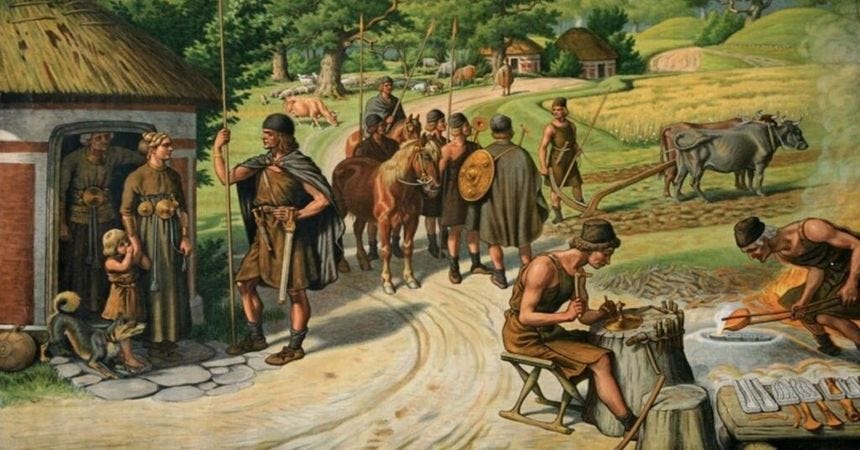
The transformation from the clan-based world of antiquity to the atomized individual of late modernity did not occur in a single rupture. It unfolded gradually across centuries, through a long process in which older forms of embedded identity were displaced by increasingly abstract and interiorized conceptions of the self. The modern individual did not emerge fully formed from the Enlightenment or the industrial city. He was produced historically, layer by layer, through religious, philosophical, economic, and institutional transformations that progressively loosened the bonds of kinship and relocated authority away from lineage and toward the isolated self.
The first decisive movement in this transformation was the universalization of identity under Christianity. In the ancient Indo-European world, the individual existed primarily as a member of a descent group. Religion itself was familial and civic, as de Coulanges observed,
“The ancient family was bound together by something more powerful than birth or affection: the religion of the hearth and of ancestors.”6
Kinship was therefore sacred. One inherited not merely blood, but obligation, cult, and continuity. Christianity altered this structure fundamentally. The new faith did not abolish family, but it relativized it. Spiritual identity superseded genealogical identity, as soul became primary. The Pauline declaration that “there is neither Jew nor Greek” represented more than theological inclusion; it marked a profound shift in the locus of identity itself.7 The individual soul now stood before God directly, detached from the exclusivity of tribe, clan, or civic cult. Salvation became universal and portable. One did not inherit membership through bloodline alone; one entered through belief. This universalization gradually weakened the absolutism of kinship. The Church’s expanding prohibitions on cousin marriage further eroded the consolidation of lineage networks that had historically sustained clan structures across Europe. Marriage increasingly became a sacramental union between individuals rather than a strategic alliance between descent groups. Over time, spiritual fraternity competed with and eventually superseded ancestral solidarity as the dominant organizing principle of social life. This process unfolded slowly, and medieval Europe remained deeply communal and kin-oriented in many respects. However, the trajectory had begun. A civilization rooted in lineage had introduced a metaphysic centered on the individual soul.
The Reformation intensified this movement inward. Protestantism stripped away layers of communal mediation and emphasized the direct relationship between individual conscience and God. The sacramental structure of medieval Christianity weakened, while interior belief became central. The faithful man no longer approached the divine primarily through inherited ritual, communal hierarchy, or sacred tradition, but through personal conviction and scripture. This transformation radically expanded the moral significance of the isolated self. The individual conscience became sovereign in spiritual life long before it became sovereign in politics. It is no coincidence that the regions most deeply shaped by Protestantism later became centers of liberal individualism and capitalist modernity. The disciplined, interiorized subject of Protestant theology would eventually become the autonomous citizen and economic actor of modern secular society.
The Enlightenment secularized this moral individualism and transformed it into a political doctrine. What had once been the immortal soul became the rational subject. Rights, liberty, and equality were no longer grounded in divine order but in abstract human individuality. Society itself increasingly came to be imagined not as an organic inheritance rooted in kinship and tradition, but as a contractual arrangement between autonomous persons. The implications of this shift were immense. The individual was no longer fundamentally embedded; he was self-owning. Obligation became voluntary rather than inherited. Kinship became secondary to legal personhood, as Todd argues that ideological systems emerge from deeper family structures. Liberalism’s emphasis on autonomy and equality did not arise in a vacuum; it reflected the long maturation of the Western nuclear family system itself. Yet once elevated into a universal principle, individualism began to exceed the social structures that originally contained it.
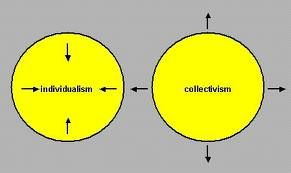
The nuclear family, once disciplined by religion and communal norms, increasingly became an association of autonomous individuals. Marriage shifted from duty toward emotional fulfillment. Parenthood became optional rather than civilizational. The family itself was transformed from a permanent corporate structure into a voluntary emotional arrangement. Industrial capitalism accelerated this process with extraordinary force. Pre-modern kinship systems were territorially rooted. Families worked the land together, maintained continuity across generations, and depended on dense local networks for survival. Industrial capitalism disrupted this embedded order. Economic life moved from household production to wage labor. The individual, rather than the lineage, became the primary economic unit. Urbanization detached millions from their ancestral places and extended kin. Mobility became a necessity rather than an exception. Labor markets rewarded flexibility, not rootedness. The old clan and communal structures, once adaptive in agrarian societies, became obstacles to industrial efficiency. In this environment, the nuclear household thrived precisely because it was thin and mobile. A small family unit could relocate for work, adapt to changing markets, and integrate into expanding bureaucratic states far more easily than dense kinship networks. The isolated household was economically efficient, but capitalism did more than reward mobility; it transformed identity itself. Under market society, individuals increasingly encountered one another not as members of enduring communities, but as economic actors. The language of obligation gave way to the language of contract. Relations once embedded in kinship and custom became transactional. The modern individual was therefore shaped simultaneously by liberal ideology and the capitalist economy. One proclaimed his autonomy philosophically; the other operationalized it materially, as Karl Marx wrote in The Communist Manifesto,
All fixed, fast-frozen relations, with their train of ancient and venerable prejudices and opinions, are swept away… All that is solid melts into air.8
Though Marx celebrated and condemned this process simultaneously, his observation was accurate. Capitalism dissolves inherited structures because fluidity increases economic dynamism. Stable kinship obligations limit labor mobility, constrain consumption patterns, and anchor individuals in non-market loyalties. The market, therefore, functions most efficiently when individuals are detached enough to move, consume, and adapt freely. The result is a paradox at the center of modern Western civilization. The same individualism that generated extraordinary technological and economic expansion also undermined the dense social structures necessary for long-term continuity. The nuclear family became increasingly fragile because it lacked redundancy. Extended kin had been stripped away. Religious authority weakened. Community obligations declined. However, the emotional and economic burdens placed upon the isolated household only intensified. Once secularization accelerated in the twentieth century, the final restraints weakened further. Marriage became increasingly temporary, fertility collapsed across the developed world, and identity itself became radically individualized. The sovereign individual, once celebrated as the endpoint of liberation, increasingly appeared socially unmoored. The culmination of this process is not the strong liberal citizen imagined by Enlightenment thinkers, but what might be called the anomic individual: detached from lineage, uncertain of continuity, economically instrumentalized, and socially isolated.
The clan had dissolved into the nuclear household. The nuclear household, under late modern conditions, began dissolving into the solitary self. What emerged was not a society liberated from obligation, but one increasingly dependent on market and state to replace the functions once performed by kinship: childcare, elder care, emotional support, socialization, even identity itself. The question facing the modern West is therefore not whether individualism produced power. Clearly, it did. The question is whether a civilization can survive indefinitely once the structures that reproduce a sense of belonging, continuity, and obligation have been systematically weakened. Civilizations do not endure through markets alone. They endure through generations.
Post-Faustian Re-Embedding: From the Nuclear Household to the Anomic Individual
The instability of the nuclear family does not occur in a vacuum. It is the product of a specific configuration of forces—moral, economic, and institutional, that have, over time, stripped away the supports that once sustained it. When these supports weaken simultaneously, the nuclear household does not gracefully evolve into a new stable form. It decomposes. The process is gradual, but its logic is clear. As religious authority declines, the moral framework that once regulated behavior within and around the family loosens. As social stigma fades, the costs of deviating from established norms diminish. As markets expand, individuals are drawn into systems that reward mobility, flexibility, and self-optimization over continuity and obligation. And as the state expands, it begins to assume functions once performed by kin; welfare provision, dispute resolution, even aspects of socialization. The cumulative effect is not liberation in any simple sense. It is disembedding.
The nuclear family, already structurally thin, depends on precisely those external reinforcements. Remove them, and its internal cohesion weakens. Marriage becomes more contingent, less binding. Childbearing becomes optional, then increasingly rare. The household contracts, not only in size but in durability. What emerges in its place is not a new family system, but something closer to its absence: a condition that can be described as anomic family structure. This is not the extended kinship of earlier societies, nor the stable nuclear household of modernity’s middle phase. It is a landscape of individuals loosely connected through transient relationships, economic exchanges, and institutional frameworks. Todd identifies a range of family systems across the globe, including what he describes as anomic or unstable structures in certain regions of sub-Saharan Africa. These systems are characterized not by strong lineage continuity or stable nuclear households, but by asymmetric mating patterns, weak paternal integration, and fluid, often transient unions, as Todd writes,
Where the family is unstable, where paternal authority is weak and unions are not durable, the individual is not embedded in a structured lineage but exists in a more fluid, less constrained social environment.9
The relevance of this observation to contemporary Western societies is not that they are becoming “African” in any cultural or historical sense. The comparison is structural, not civilizational. What Todd identifies is a pattern a configuration of weakly institutionalized family relations, that can emerge under certain conditions. In late modern Western societies, similar conditions are now present. The result is a convergence at the level of structure. Stable marriage declines. Paternal roles become less consistent. Childbearing occurs increasingly outside durable unions, or not at all. The family ceases to function as a reliable unit of continuity. This is what is meant by anomie in the familial sense: not chaos in the dramatic sense, but the absence of stable, normative structures that bind individuals into enduring relationships. Emile Durkheim, whose analysis of anomie remains foundational, described it as a condition in which “the limits are unknown between the possible and the impossible, what is just and what is unjust.”10 He further observed that when social norms weaken, individuals are left without clear frameworks for action or expectation.11 Applied to the family, this means that the roles once taken for granted; husband, wife, parent, child, all lose their clarity. Relationships become negotiable, provisional, subject to revision or abandonment. The individual is freed from constraint, but also from structure. The consequences are visible in the demographic and social patterns of late modernity. Fertility declines not only because of economic calculation, but because the institutional framework that once made childbearing a default expectation has eroded. Relationships form and dissolve with greater frequency. The life course becomes less predictable, more individualized, but also more fragile. At the same time, the functions once performed by the family do not disappear, but they are redistributed. Childcare, elder care, and social support are increasingly mediated by the state or by market services. Emotional needs are addressed through therapeutic frameworks or digital networks. Identity is constructed through consumption, career, and self-expression rather than inherited roles. In this sense, the individual is not simply isolated; he is repositioned. He stands at the intersection of market and state, linked to each through formal mechanisms, but less embedded in organic, intergenerational structures.A society composed of dense kinship networks possesses a certain degree of internal autonomy. Obligations are enforced locally, resources are shared within groups, and authority is distributed. By contrast, a society of atomized individuals is more directly legible to centralized institutions. Needs are individualized, claims are made through formal channels, and dependence on external systems increases. This is not to suggest a deliberate strategy of control, but a structural tendency. As kin-based systems weaken, the state and market expand to fill the vacuum. The individual becomes more visible, more measurable, and more manageable. Todd’s comparative framework highlights this dynamic indirectly. Where family structures are strong and cohesive, they mediate the relationship between the individual and the state. Where they are weak or unstable, that mediation diminishes. The individual relates more directly to centralized institutions.
In late modern Western societies, this pattern is increasingly evident. The decline of stable family structures coincides with the expansion of bureaucratic and economic systems that operate at a distance from the individual’s immediate social context. The result is a form of asymmetrical embedding: the individual is deeply integrated into large-scale systems, but weakly integrated into local, intergenerational networks. This asymmetry has consequences for both social cohesion and individual well-being. Without dense kinship ties, the transmission of norms, values, and practices becomes less reliable. Cultural continuity weakens. At the same time, individuals may experience greater freedom in the short term, but also greater uncertainty and isolation over the life course. The nuclear family, in its mid-modern form, balanced these tensions. It provided a degree of autonomy while maintaining a stable unit for reproduction and socialization. But that balance depended on a broader environment of high moral density, shared norms, strong institutions, and limited alternatives. Once that environment dissolves, the nuclear model loses its equilibrium. What replaces it is not a new stable form, but a transitional condition: a society of individuals who are formally free but structurally unanchored, connected more to systems than to lineages, more to institutions than to inherited communities.
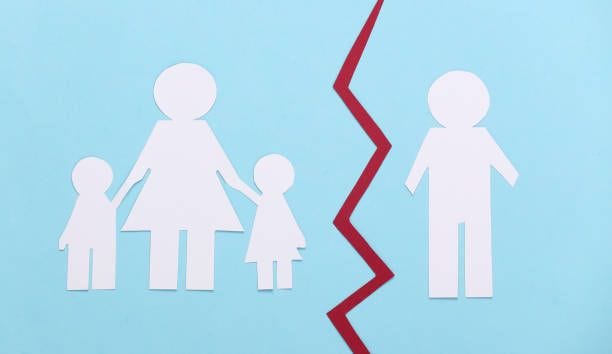
The question, then, is not whether this condition can persist indefinitely, but whether it is self-sustaining. A family system that does not reliably produce and integrate the next generation cannot serve as the foundation of a long-term social order. If the anomic structure becomes dominant, the problem is not merely one of personal dissatisfaction. It is one of the aspects of civilizational continuity. In this light, the current moment appears less as a final stage and more as an interruption, a phase in which the previous structure has decomposed, but a new one has not yet fully emerged. Whether that new structure will resemble earlier forms of kinship or take on a novel configuration adapted to contemporary conditions remains an open question. But the direction of movement is clear. The nuclear family, once seen as the culmination of social evolution, now reveals itself as a contingent form that depended on conditions no longer present. In their absence, the underlying need for social density does not disappear. It reasserts itself, often in fragmented or unstable ways. The task, then, is not to lament the loss of a particular model, but to understand the structural requirements of any system capable of sustaining human societies over time.
Post-Faustian Re-Embedding: Against the Sovereign Individual
The central claim of modern Western political and moral thought is so deeply embedded that it often goes unnoticed: the individual is primary. Society, in this view, is an aggregate of autonomous agents who precede their relationships, institutions, and inheritances. This assumption underlies liberal rights theory, market ideology, and even much contemporary social critique. Yet as a historical claim, it is not universal. As an anthropological claim, it is not neutral. And as a civilizational principle, it may now be reaching its limits. The preceding sections have traced a long transformation: from descent-based kinship systems, through Christian universalism, through early modern interiorization, into industrial and late-modern atomization. What emerges at the end of this trajectory is not liberation, but disembedded individuality, a condition in which persons exist formally free, but structurally unanchored from the dense webs of obligation that once sustained social life.
At this point, the question is no longer descriptive but normative in a civilizational sense: whether the sovereign individual can remain the foundational unit of society without producing systemic fragility. To frame this differently: modernity has treated the individual as the irreducible atom of social order. The accumulated evidence of demographic decline, family instability, and social fragmentation suggests that this atomization may not be structurally sustainable. This is where a re-evaluation of pre-modern kinship forms becomes unavoidable, not as nostalgia, and not as restoration, but as structural comparison. Across Indo-European societies, from classical antiquity to early tribal formations, we observe recurring patterns of descent-based organization. These systems did not treat the individual as primary. They embedded him within a lineage, a household, or a clan that extended across generations. Identity was not self-generated but inherited. Obligation was not optional but constitutive. Within this framework, what modernity calls “constraints” were understood as forms of continuity. The individual did not exist outside the social fabric; he was produced by it and responsible to it. As de Coulanges captured this logic in his analysis of ancient kinship systems:
The family was not a collection of individuals, but a sacred institution that extended through time; it united the living with the dead and bound each generation to the next through duty and worship.12
In such a system, individuality is not erased, but situated. The person is real, but not sovereign. He acts within a structure that precedes and outlives him. The modern objection is predictable: such systems suppress freedom, inhibit mobility, and entrench hierarchy. But this critique assumes that freedom without structure is a stable condition. The empirical record of late modernity suggests otherwise. Autonomy, when detached from durable social embedding, does not simply produce liberation; it also produces instability, psychological, demographic, and cultural, as Todd emphasizes that family structures generate long-term social equilibria. Societies are not neutral containers of individuals; they are patterned by deep kinship forms that shape behavior, belief, and expectation. If this is correct, then the modern elevation of the individual is not simply a philosophical innovation. It is a structural intervention that has progressively dissolved older forms of embeddedness without fully replacing them. The result is a gap between formal autonomy and functional cohesion.
The concept of a “return to the clan” might be misread as a form of regression. That reading assumes that historical forms are linear stages of progress, with the nuclear family as an endpoint, but the argument here is different. It is not that earlier forms should be restored wholesale. It is that the functional capacities of those forms—what they achieved in terms of continuity, stability, and embeddedness must be reconsidered in light of contemporary failure modes. The clan, as a social technology, performed several interrelated functions that modern systems struggle to replicate. It distributed risk across multiple generations and branches of kin, reducing the vulnerability of any single household. It embedded individuals within long-term identity structures, ensuring continuity beyond the nuclear lifespan. It organized marriage as an alliance, not merely a personal preference, thereby extending networks of obligation. And it regulated economic life through non-market obligations, preventing total absorption into impersonal exchange systems. These are not romantic features, but they are structural mechanisms of social stability. In contrast, the late-modern configuration privileges mobility, individual choice, and market integration. These produce efficiency and flexibility, but also fragility. The nuclear family, already minimal in its kin redundancy, becomes increasingly exposed as external supports weaken. At this point, a post-individualist reconfiguration becomes thinkable, not as a return to a specific historical period, but as a re-densification of social structure. Such a transformation would likely involve several shifts. Extended kin networks would regain practical significance, not merely symbolic recognition. Multi-generational households, once common across much of human history, would become normalized rather than exceptional. Inheritance and family enterprise would be re-centered within lineage continuity, ensuring that accumulated resources remain embedded in durable social units rather than fully abstracted into liquid capital.
Here, a controversial but structurally consistent argument emerges, the re-legitimation of what modern ideology frames as nepotism, as in kin-based systems, preferential treatment of family members is not corruption but a mechanism. It ensures continuity, preserves accumulated knowledge and resources, and strengthens long-term group survival and prevents outsiders from taking familial wealth. The modern insistence on strict impersonality in all allocation of opportunity reflects a particular ideological commitment, not a universal social law. A re-embedded system would necessarily reconsider the balance between impartiality and continuity. Geographic mobility would also likely decrease. The extreme detachment of individuals from place and lineage, one of the defining features of late capitalism, would be recognized not only as economic flexibility but as social erosion. Stability of residence would reinforce continuity of relationships, inheritance, and cultural transmission. At a broader level, identity itself would become more localized and inherited rather than purely self-authored. Culture and faith would cease to function primarily as globalized, abstract systems and would instead re-anchor in particular communities, lineages, and regions. Politics, correspondingly, would shift from the aggregation of abstract individuals to the negotiation of embedded, durable social groups.
This would not eliminate individuality. Rather, it would re-situate it within a thicker social fabric. The individual would again be a person-in-relation, not a self-standing unit of economic and legal abstraction. It is important to emphasize that this is not a call for uniformity or historical reenactment. No future system will replicate pre-modern Europe. As Oswald Spengler suggests, civilizations do not return to earlier stages; they reconfigure inherited material under new conditions. Forms recur in altered guises, not as repetitions but as transformations. The question, then, is not whether modernity can be undone. It is whether its core assumption, the primacy of the sovereign individual, can continue to serve as the foundation of social order. If the evidence of late modernity is taken seriously, the answer is increasingly uncertain. A society that cannot reliably reproduce itself biologically, transmit culture across generations, or maintain stable relational structures may require more than technical adjustment. It may require reconsidering its most basic unit of analysis.
The argument of this essay, taken as a whole, is that the nuclear family was a historically contingent stabilization of a much longer transformation of modern Faustian civilization. It succeeded under specific moral and institutional conditions, but those conditions are no longer in place. In their absence, the system is revealing its structural limits. What follows is not predetermined. But one possibility is clear: if societies are to regain continuity, they may need to move beyond the radical individualism that defines modernity, and toward forms of embedded life that restore density, obligation, and intergenerational continuity. Not a return to the past, but a re-anchoring of the present in structures capable of sustaining the future.

1 Todd, Emmanuel. The Explanation of Ideology. Translated by David Garrioch, Blackwell, 1988.
2Ibid
3 de Coulanges, Fustel Denis. The Ancient City : A Study on the Religion, Laws, and Institutions of Greece and Rome. Translated by Willard Small, Imperium Press, 2020.
4 Hearn, William Edward. The Aryan Household: Its Structure and Its Development. Createspace Independent Publishing Platform, 2016.
5 Todd, The Explanation of Ideology, 1988.
6 de Coulanges,The Ancient City : A Study on the Religion, Laws, and Institutions of Greece and Rome, Imperium Press, 2020.
7 Galatians 3:28
8 Marx, Karl, and Friedrich Engels. The Communist Manifesto. Penguin, 2011.
9 Todd, The Explanation of Ideology, 1988.
10 Durkheim, Emile. Suicide: A Study in Sociology. Translated by Robin Buss, Penguin Classics, 2006.
11Ibid
12 de Coulanges,The Ancient City : A Study on the Religion, Laws, and Institutions of Greece and Rome, Imperium Press, 2020.
Wonderful work, and a needed reflection on the fundamentals of our social fabric.
I am of the opinion myself that the future world will be one where family connections will be ever more important, as competition against AI and againt the vast mass of people from all over will force people to fall back to the one available way out.
People like Johann Kurtz are already working on a high-level strategy for a modern day dynastic system, which is the purest expression of the clan principle that we can recognise in the modern day. The proliferation and popularity of family trusts and funds expresses that logic of kin being the locus of ownership of resources. As we move into increasingly constrained economy of ownership of intellectual property, it will be critical to maintain and pass on these accumulated goods to your family if they are to escape from becoming part of the permanent underclass that looms large on our horizons.
I completely agree with this analysis. The nuclear family is not an eternal default, but a temporary stabilization forged to serve high-industrial capitalism. With its scaffolding gone, the radical individualism left behind is proving socially and ecologically unsustainable.
From a Polycentric Ecological Integralist perspective, this breakdown is a predictable structural crisis. Isolating the human person within an atomized nuclear unit severs the nested, overlapping relationships that naturally connect the individual to the wider community and the living landscape.
This is where Friedrich Engels’ work—drawing on the American anthropologist Lewis H. Morgan’s studies of matrilineal Iroquois clans—becomes highly relevant. Morgan proved that human societies long maintained stability through dense, decentralized kinship networks that distributed care, balanced power, and treated resources as an intergenerational trust.
Moving beyond radical individualism is not a regression, but a sophisticated step forward. By restructuring our communities around dense, polycentric layers of mutual aid and ecological stewardship, we can restore genuine intergenerational continuity and build a resilient framework for the future.